In a custom website vs template comparison, choose a custom website when your business needs tailored customer journeys or workflows; choose a template when standard pages and built-in features meet your requirements. Your business website should help prospective customers take a useful next step, whether that means requesting a quote or completing a purchase.
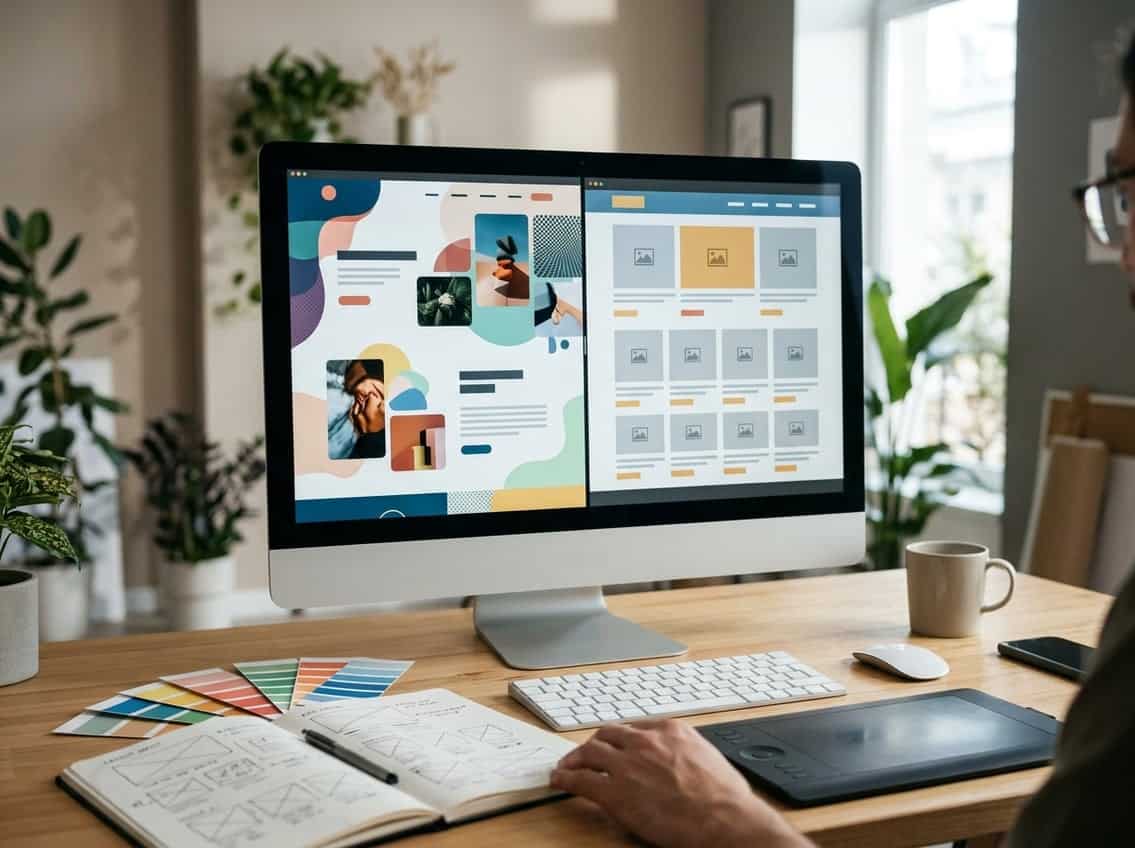
Your custom website vs template decision affects the work behind that result: how you publish content, connect business tools, and pay for changes after launch. A polished starting layout offers value, while a purpose-built structure gives you greater control over specific requirements.
With Sacramento Web Design Group, you bring those requirements into a strategy-led website design process backed by more than 30 years of local experience. Your choice becomes clearer when you separate essential business capabilities from features you have little reason to fund.

In a custom website vs template decision, you buy a predetermined starting structure with a template and a requirements-led design process with a custom website. Your platform choice is a separate decision: WordPress supports both approaches, and website builders offer varying levels of customization.
| Criterion | Custom Website | Template Website |
|---|---|---|
| Starting structure | Requirements-led | Predesigned |
| Launch investment | Higher design effort | Lower starting effort |
| Design flexibility | Tailored components | Theme-dependent |
| Ownership | Contract-dependent | License/platform-dependent |
| Maintenance | Assigned support | Platform/shared duties |
| SEO potential | Execution-dependent | Execution-dependent |
For a custom website vs template decision, start by defining your audience, business objectives, and required functionality. Your scope should identify page layouts, content structure, editing tools, integrations, and launch testing.
Your custom website design might include reusable service-page components, a specialized quote form, or structured location information. Custom websites still use established software libraries and platforms; a custom-built website does not require every component to be written from scratch.
Ask your provider to separate design deliverables from web development deliverables. You should know whether your investment includes copywriting, data migration, and post-launch support.
In the custom website vs template comparison, a template gives you predesigned layouts and styling that you configure with your content. Your template-based website might use a WordPress theme or a website builder such as Wix, Squarespace, or Webflow.
Website templates reduce initial layout work when your content fits their structure. You still need to prepare images, write useful copy, configure forms, and test the finished website.
Before selecting a template website, replace its demonstration content with a representative service page. You will learn more from fitting your longest heading and actual photography into the layout than from browsing a polished demo.
With custom WordPress design, you combine an established content management system with layouts and editing controls tailored to your business. Your team retains familiar publishing tools while your developer handles specialized requirements.
A hybrid approach starts with an existing theme or component system and adds targeted customization. You might keep standard blog functionality while commissioning a custom service directory.
Ask which parts of your website development are original, licensed, or dependent on third-party tools. That distinction helps you assess future updates and the effort required to change providers.

Your total website cost includes launch work, recurring services, internal editing time, and future changes. Ownership and maintenance terms determine how much control you retain when your requirements or provider relationships change.
Your custom website cost includes discovery and design work that a ready-made layout reduces. Your template website cost still includes setup, content preparation, and any customization needed to make the starting design useful.
Compare proposals over the same ownership period, such as three years. Include hosting, subscriptions, plugin renewals, support, accessibility testing, and likely feature changes.
For defined work beyond an approved scope, Sacramento Web Design Group lists Project design / outside-of-scope piecework: $130 per hour. Use the published pricing to inform your contingency planning, and request a tailored proposal for your complete project.
Your contract and account setup determine your control over each asset. Custom website development alone gives you no assurance about intellectual property rights or access credentials.
Register your domain through an account your business controls. Confirm your rights to supplied content and commissioned code, plus the licenses covering fonts, images, themes, and plugins.
Ask what you receive if you leave: content exports, media files, database access, and transferable code where applicable. An HTML, CSS, or JavaScript export represents only part of a site if forms or other functions depend on hosted services.
Your support agreement should name the person or provider responsible for each maintenance task. Hosted builders manage substantial platform infrastructure; with self-hosted WordPress, you need explicit responsibility for core, theme, and plugin updates.
Request backup retention details and a documented restoration process. You also need access controls, security monitoring, and a way to test updates before they affect important forms or transactions.
Separate technical maintenance and support from everyday publishing. Your team should know which text and image changes it handles independently, which requests incur charges, and how urgent problems get escalated.
You need enough design flexibility to present your offer clearly and support the actions your customers take. Your website templates vs custom design comparison should focus on content fit, usable interfaces, and measurable lead generation.
Your brand identity includes messaging and visual choices that help customers recognize your business. A template supports cohesive branding when its layout accommodates your content without awkward compromises.
Evaluate your website design using representative material: a detailed service description, a customer testimonial, a staff profile, and a real call to action. Look for readable typography and consistent treatment across page types.
Custom design earns its place when your information needs a distinct presentation. For example, you might need visitors to compare service packages using criteria that a standard card layout handles poorly.
The W3C Web Content Accessibility Guidelines offer a useful framework for evaluating accessible navigation, content and interactions regardless of design approach.
Your user experience depends on whether visitors understand the navigation and complete tasks across devices. A responsive label on a theme provides a starting point for testing mobile responsiveness.
Check your user interface with keyboard navigation, visible focus indicators, labeled form fields, and readable color contrast. Test zoomed text and error messages as well as small-screen menus.
Include accessibility requirements and acceptance checks in your scope for either approach. If you have legal compliance obligations, obtain qualified guidance and arrange appropriate review; choosing custom design or a template does not establish compliance by itself.
Your lead generation pages should connect a visitor’s question to a relevant action. A service page needs enough information to establish fit before asking someone to submit an inquiry.
Map your primary digital marketing campaigns to suitable landing pages. Define what happens after submission, including confirmation messages and routing to the appropriate person.
For A/B testing, confirm that you can change a headline or form without rebuilding the page. Track completed inquiries and qualified opportunities so you evaluate design changes against business outcomes.
Your SEO performance and growth capacity come from implementation quality, useful content, and architecture that supports planned changes. Either build approach requires ongoing attention to search visibility and operational needs.
You gain no automatic search engine rankings advantage from a custom design label. Your organic traffic depends on relevant content, crawlable pages, internal linking, and other signals beyond visual originality.
Treat search engine optimization as a defined workstream with responsibilities and deliverables. Include keyword-to-page mapping, useful titles, indexation checks, and redirects for changed URLs.
For your Sacramento business, align service information and location details with the customers you serve. A well-configured template supports that work; custom development helps when you need technical control that your current setup restricts.
For objective performance measures, see Google’s Core Web Vitals guidance. Both custom and template websites benefit from testing real user experience rather than assuming one approach is faster.
Measure your page speed on populated pages with the scripts you intend to use. Large images, embedded media, tracking tools, and hosting decisions affect both template and custom implementations.
Use Core Web Vitals to assess loading performance, responsiveness, and visual stability. Review real-user data when available, alongside diagnostic tests that help identify specific problems.
For technical SEO, confirm control over redirects, canonical tags, indexing directives, sitemaps, and structured data. Your SEO optimization plan should identify who fixes each issue and how changes get verified after deployment.
Build your scalable website around defined business changes, such as adding locations or introducing online sales. Write down the data involved and how frequently it needs to move between systems.
For CRM integration, specify field mapping, consent handling, duplicate records, and failure alerts. For eCommerce integration, document inventory ownership, checkout requirements, and fulfillment workflows.
Your eCommerce design decisions should also account for product options and customer account needs. Shopify and WooCommerce support established commerce workflows; assess the required integrations and customization before choosing the platform or design approach.
Choose a well-configured template for familiar requirements and a custom build for requirements that need dedicated design or development. Your small business website proposal should connect the recommended approach to specific work and an achievable launch scope.
A template is sufficient when your main requirements fit its existing capabilities and your team finds the editor practical. A straightforward service website with standard inquiry forms is a strong candidate.
Start your website design brief with the pages and actions required for launch. Keep optional features separate so they do not inflate your first release.
Check the template’s update history and support terms before committing. Your launch deadline also needs time for content approval, testing, domain configuration, and corrections, even when the layout is ready-made.
Custom design justifies the investment when it solves a documented limitation with a meaningful operational or customer benefit. Examples include complex service selection, reusable content models, or integration work that eliminates repeated manual entry.
When comparing custom websites vs templates, estimate the recurring effort each option requires. Include the hours your team spends maintaining duplicate information or requesting routine publishing changes.
Among your questions to ask a web designer, include which requirement drives each custom feature. In a custom website design vs template proposal, you should see the added deliverable and its purpose stated clearly.
With Sacramento Web Design Group’s strategy-led process, you begin with a Free 30-minute consultation about your website potential, objectives, next steps, and budget considerations. You then move into research, strategy, and mission planning before reviewing a defined proposal.
Your proposal aligns website design services with your scope, timeline, and pricing. Development, design, and deployment follow the approved concept, with ongoing support available after launch.
For deeper planning, you have access to a consultation and strategy session at $100 per hour. Your discussion can include a discovery workshop, opportunity brief, two viable mockups, a legal requirements brief, SEO discussion, and Google for Business recommendations.
Make your custom website vs template choice by matching essential requirements to the simplest maintainable approach that fulfills them. A template suits standard content and established features; a custom website supports tailored structures and workflows when those requirements justify the investment.
For your WordPress project, confirm ownership terms and everyday editing responsibilities alongside design scope. Keep lead generation goals tied to specific pages, forms, and follow-up processes.
Bring your must-have features, target launch date, and budget considerations to a free 30-minute strategy and design consultation with Sacramento Web Design Group. Discuss which website approach fits your business requirements and what your proposal should include.
To settle the custom website vs template question, check content fit, available technical support and the effort required to change direction later.
With a website template, you configure an existing design; with a custom website, you commission structure and functionality around defined requirements. Your contract and platform determine ownership, maintenance responsibilities, and portability for either option.
Yes, you can use a free website template for a small business when its features and license meet your needs. Budget separately for your domain, hosting, content, and maintenance, and check the template’s support and update arrangements.
Use a website builder when you need standard features and visual editing; code your own website when you have the skills and time to maintain specific technical requirements. Your HTML knowledge helps with page structure, while forms and other dynamic functions require additional implementation and support.
Yes, your custom WordPress website supports straightforward updates when your build includes reusable blocks and clear editing controls. Ask for training and practice your routine changes before launch; Sacramento Web Design Group offers onsite WordPress training and guidance.
Yes, you can start with a template and move to custom design when your requirements expand. Protect the transition by keeping domain access, organizing your content, and confirming export options early; plan redirects and test forms during the migration.