Use a landing page when you want campaign visitors to take one specific action; use your homepage when you want visitors to discover your business and choose among several relevant paths. For your lead generation campaigns, that distinction helps you send each click to a destination that supports the next step.
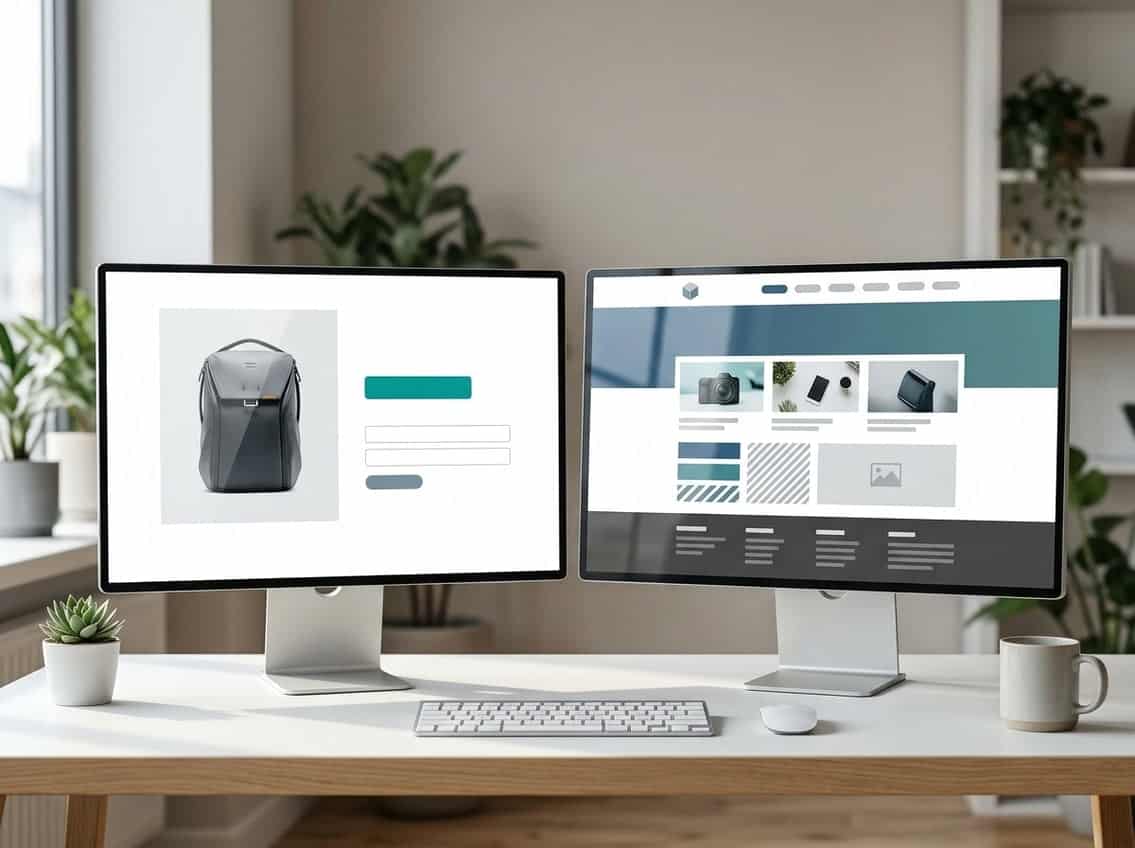
Your landing page vs homepage decision starts with the promise that brought someone to your website. An appointment offer needs a focused booking experience. A search for your business name calls for broader information and useful navigation. With Sacramento Web Design Group’s strategy-led website design, you align those experiences with your business goals before choosing layouts.

You give campaign visitors a focused decision on a landing page and give a broader target audience several useful choices on your homepage. Your website navigation should reflect how much direction each audience needs.
The landing page vs homepage distinction matters because visitors arriving from a specific offer usually need fewer choices than people exploring your company for the first time.
On your landing page, you organize the content around a single campaign action, such as requesting an estimate. You keep competing links limited while retaining necessary privacy information and credibility details. Repeated buttons should support the same goal.
Your homepage navigation serves people with different needs. You provide routes to services, company information, resources, and contact options while keeping your primary business action prominent.
| Criterion | Your Landing Page | Your Homepage |
|---|---|---|
| Primary goal | One campaign action | Discovery and routing |
| Audience | Defined segment | Broad visitor mix |
| Navigation | Focused options | Main website menu |
| Message | Specific offer | Business positioning |
| Main measurement | Campaign conversions | Useful next steps |
For landing page vs homepage decisions, compare the visitor’s search term or ad promise with the headline and next action they see after clicking.
You create message match when your page continues the promise of the ad or email that brought someone there. If your ad promotes commercial cleaning estimates, your headline and form should address that service. A generic welcome message leaves visitors searching for the offer.
With homepage traffic, you accommodate a wider range of expectations, including referrals and returning customers. Document those differences in your website design brief so your content and navigation support the intended user experience.
You resolve the landing page vs website distinction by separating an individual destination from the larger collection of web pages. Your website includes its homepage and supporting pages; you also have the option to host campaign landing pages within it.
The homepage vs website distinction follows the same logic: your homepage is the central entry point, while your website provides the complete experience. Across your marketing funnel and sales funnel, you use different pages to support discovery, evaluation, and action.

Send visitors to a focused destination when your promotion makes a specific promise, and use your homepage when visitors need broad orientation. You should also consider existing service pages or product pages when they already fulfill that promise.
For Google Ads and Facebook Ads promoting a defined offer, give your paid traffic a destination that explains the offer immediately. Your PPC campaigns should preserve the advertised service, eligibility conditions, and next step. For email campaigns promoting webinar registration, send recipients directly to registration details and the form.
Paid advertising alone does not determine when to use a landing page. A branded campaign introducing your whole business has different requirements from lead generation campaigns advertising one service. Choose the destination using the visitor’s expected task.
Use your homepage when someone wants to identify your business, assess your credibility, or explore your offerings. Brand awareness campaigns and searches for your company name fit this broader experience.
Your homepage should communicate an effective brand identity through recognizable visuals and clear positioning. For organic traffic, match the destination to the search: broad
A homepage introduces the business as a whole, while a landing page is built around a narrower visitor need. Neither is automatically better: the right destination depends on what the visitor expects and what your business can deliver.
| Decision factor | Landing page | Homepage |
|---|---|---|
| Primary purpose | Encourage one defined conversion | Introduce the business and guide exploration |
| Typical traffic | Paid ads, email promotions, targeted campaigns | Branded searches, direct visits, referrals |
| Navigation | Limited distractions with essential links retained | Full navigation to services, company information, and contact |
| Content emphasis | One offer, audience, or service | Multiple services and trust-building information |
| Success metric | Qualified leads, appointments, purchases, or sign-ups | Useful onward journeys, qualified inquiries, and engagement |
For example, a Sacramento remodeling company may use its homepage to explain kitchen renovations, bathroom remodeling, and additions. A campaign promoting kitchen consultations should instead lead to a focused kitchen-remodeling page with examples, service-area details, and one prominent consultation request.
Strong landing page vs homepage planning begins with message match. If an advertisement offers a commercial roof inspection, the destination should explain that inspection rather than present a generic list of roofing services. A clear headline helps visitors confirm they reached the right place.
State who the offer is for, what the visitor receives, and what happens after they respond. Avoid vague guarantees or unsupported claims. If the service is available only in certain ZIP codes or during specified hours, make those limits visible.
Choose a conversion that fits the visitor’s readiness: schedule a consultation, request an estimate, or ask a question. Repeat the same primary action near relevant sections rather than introducing several unrelated offers. Keep form fields proportionate to what your team needs for a useful first response.
For lead generation, name, contact details, service type, and a brief project description may be sufficient. Explain response expectations accurately and link to the privacy notice. Confirm that submissions reach the correct inbox or customer relationship management system.
Include genuine project examples, verified testimonials, credentials, or a concise explanation of your process. Proof should be specific to the offer: a commercial service campaign benefits more from relevant commercial work than from an unrelated residential gallery.
Mobile usability matters because campaign clicks often happen on phones. Test the page with real devices, check form labels and error messages, and ensure buttons remain easy to use. The W3C Web Accessibility Initiative provides practical accessibility guidance.
Your homepage should answer three immediate questions: what do you do, whom do you serve, and where do you operate? Follow with a clear route to your primary services, evidence of relevant experience, and an obvious contact option. For a multi-service company, forcing every visitor into a single offer can make the site less useful.
Use a concise introduction and scannable service summaries. Link to detailed service pages rather than crowding the homepage with every technical specification. A thoughtful custom WordPress website design can support both the broad homepage and campaign-specific destinations.
Show authentic company information, relevant service areas, contact details, and helpful examples. Visitors comparing providers may want to review your team, process, and previous work before reaching out. Give those people useful paths without burying the contact action.
For local businesses, connect the homepage to service pages and location-specific information that reflects actual operations. Avoid publishing near-duplicate city pages solely to repeat place names. Your Sacramento SEO strategy should help visitors and search engines understand the services you genuinely provide.
A high conversion rate does not necessarily mean a campaign is profitable. Track completed forms, booked appointments, answered calls, and the quality of resulting inquiries. Separate conversions by traffic source so you can compare similar audiences.
For landing page vs homepage reporting, establish the baseline before making changes. Record visits, conversion actions, qualified leads, and relevant costs over a meaningful period. If the landing page receives high-intent ad traffic while the homepage serves a broader audience, do not treat their raw conversion rates as a fair head-to-head contest.
Consider testing headline clarity, form length, trust signals, or the placement of the primary call to action. Avoid changing several major elements simultaneously if you need to understand which change helped. Make sure conversion tracking works before drawing conclusions.
Google’s landing page experience guidance explains why relevant and useful destinations matter for advertising. For website performance checks, PageSpeed Insights can help identify loading and usability issues.
Yes. Most established businesses benefit from a strong homepage and selected landing pages for specific campaigns. The homepage serves visitors who want to understand the company; landing pages serve visitors responding to a defined offer. Each page should accurately represent your services and make the next step clear.
Start with the homepage and essential service pages if your site is new. Add dedicated campaign pages when you have a clear offer, a traffic source, and a way to measure outcomes. Before launching, verify mobile forms, thank-you messages, analytics, privacy links, and lead notifications.
No. A homepage generally introduces the entire business and links to multiple areas. A landing page usually focuses on one offer or conversion goal. Both can include contact options, but their navigation and content priorities differ.
Send ads to the page that most closely matches the promise in the ad. A focused service offer often benefits from a dedicated landing page. A broad branded search may be better served by the homepage or another relevant business page.
Yes, if it provides useful, indexable content and meets the needs of searchers. Some short-lived campaign pages are intentionally excluded from indexing; that decision should reflect the page’s purpose, not an assumption that all landing pages should be hidden.
Create pages for genuinely distinct offers, audiences, or services when you can maintain accurate content and measure results. A handful of well-supported pages is usually more useful than dozens of nearly identical variations.
Identify where visitors come from and what they want to accomplish. Then choose the page that answers their immediate questions with the fewest unnecessary steps. Sacramento Web Design Group can help plan both experiences around qualified inquiries rather than page views alone.